IMD's El Niño Warning: How It Could Impact India's 2026 Monsoon
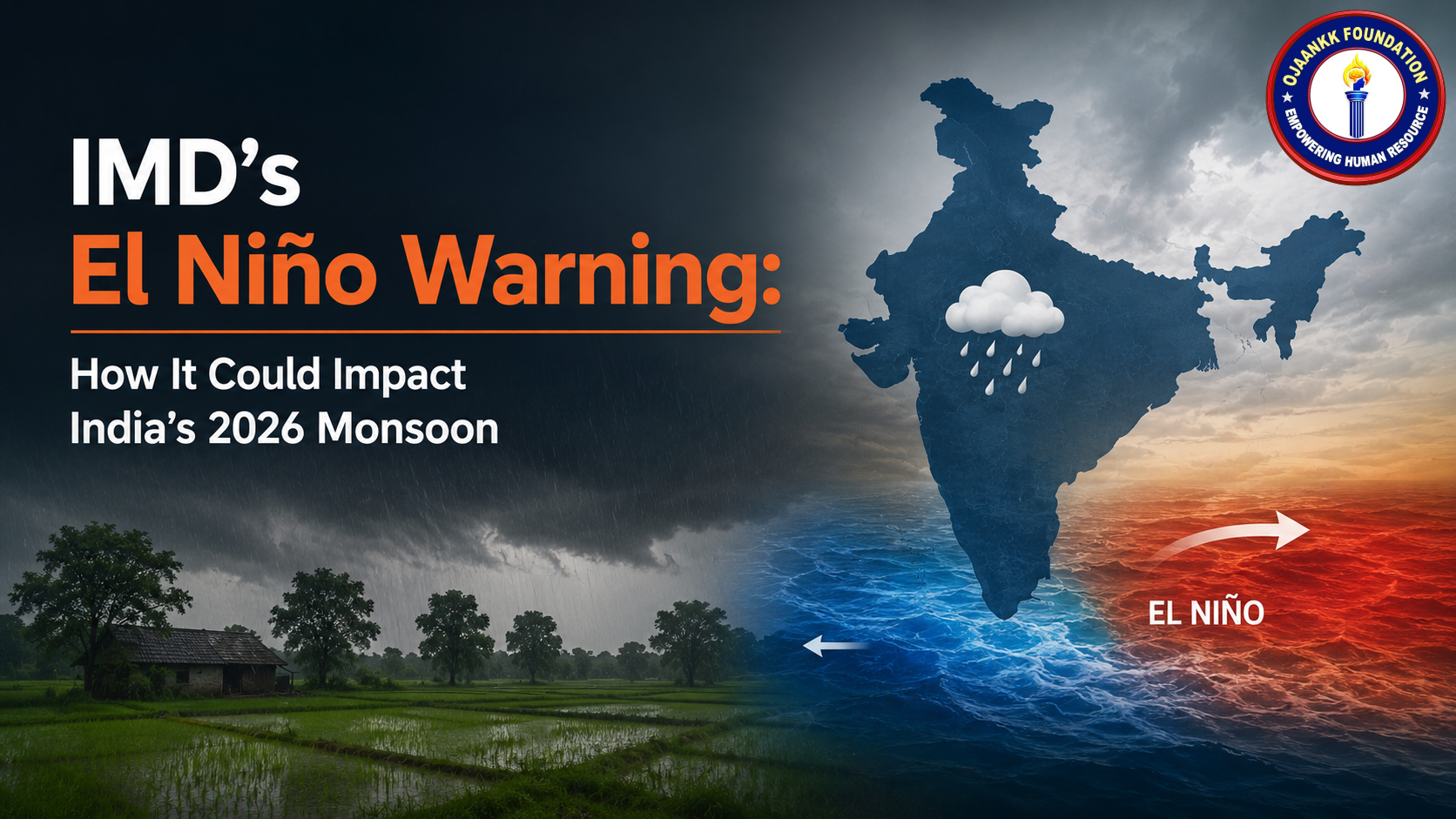
IMD's El Niño Warning: Should India Be Worried About the 2026 Monsoon?
Introduction
The arrival of the monsoon is one of the most anticipated events in India every year. From farmers waiting to sow crops to cities depending on rainfall for water supply, millions of people closely follow monsoon forecasts.
This year, the India Meteorological Department (IMD) has expressed concern about the possible strengthening of El Niño conditions, which could influence the performance of the 2026 monsoon season. While this does not automatically mean drought, it does raise questions about rainfall patterns and agricultural productivity.
What is El Niño?
El Niño is a natural climate phenomenon that occurs when the waters of the Pacific Ocean become warmer than usual.
Although it develops thousands of kilometers away from India, it can influence weather conditions across the globe. In India, El Niño is often associated with weaker monsoon rainfall and higher temperatures.
However, every El Niño event is different, and its impact can vary from year to year.
Why is the IMD Concerned?
Weather experts have observed signs that El Niño may strengthen during the monsoon months.
If this happens, some parts of India could experience:
Lower-than-normal rainfall
Uneven distribution of rain
Longer dry spells between rainy periods
Increased heat conditions
The concern is not only about how much rain falls, but also when and where it falls.
Impact on Agriculture
Agriculture remains heavily dependent on monsoon rainfall in many parts of India.
A weak or irregular monsoon can affect:
- Paddy cultivation
- Pulses production
- Oilseed crops
- Sugarcane farming
- Cotton cultivation
Lower rainfall can reduce crop yields and increase production costs for farmers.
Impact on the Economy
A poor monsoon affects more than just farming.
Reduced agricultural output can lead to:
- Higher food prices
- Increased inflation
- Lower rural income
- Pressure on water resources
- Slower economic growth in some sectors
This is why monsoon forecasts are closely monitored by policymakers, businesses, and financial markets.
Is a Weak Monsoon Certain?
Not at all.
While El Niño increases the chances of below-normal rainfall, several other climate factors also influence India's weather.
Weather systems in the Indian Ocean, regional atmospheric conditions, and seasonal changes can sometimes reduce or offset the impact of El Niño.
This means India can still receive satisfactory rainfall even during an El Niño year.
What Can Farmers Do?
Preparation is the best defense against uncertain weather.
Farmers can:
- Follow regular weather updates
- Use water-efficient farming techniques
- Adopt drought-resistant crop varieties
- Improve rainwater harvesting practices
- Diversify crops to reduce risk
Timely planning can help minimize losses and improve resilience.
Looking Ahead
The coming months will determine how strongly El Niño affects the Indian monsoon. Weather agencies will continue to monitor developments and update forecasts as new data becomes available.
For now, there is no reason for panic, but there is certainly a need for caution and preparedness.
Conclusion
The IMD's El Niño warning is an important reminder of how closely India's economy and agriculture are linked to the monsoon. While the exact impact remains uncertain, staying informed and prepared will be crucial.
Whether you are a farmer, student, policymaker, or simply someone interested in weather and climate, the 2026 monsoon season will be worth watching closely.