India's Anti-Paper Leak Law 2026: What's New in the Amendment Bill?
India's Anti-Paper Leak Law 2026: What's New in the Amendment Bill?
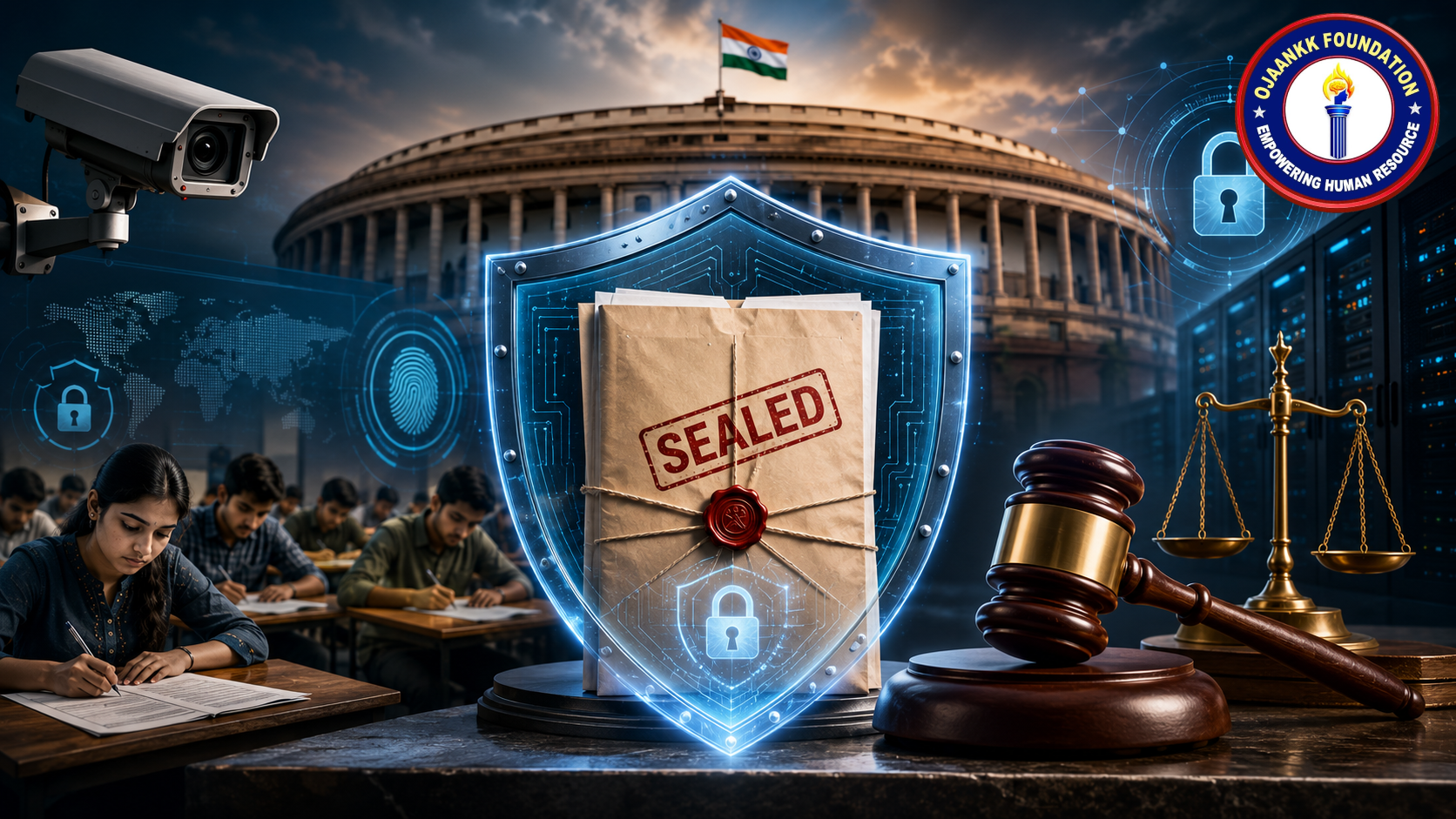

Public Examinations (Amendment) Bill 2026 Explained
Introduction
The Public Examinations (Prevention of Unfair Means) Amendment Bill, 2026 was introduced in Parliament following widespread concern over recurring paper leak incidents and growing demands for stronger safeguards in India's examination system. The proposed amendments seek to strengthen the legal framework established under the Public Examinations (Prevention of Unfair Means) Act, 2024.
The Bill goes beyond increasing punishments. It aims to improve investigation, prosecution, and institutional accountability while restoring public confidence in high-stakes examinations such as recruitment tests and national entrance examinations.
Why This Matters Now
- The Bill was introduced after major paper leak controversies and nationwide student protests demanding examination reforms.
- It seeks to strengthen legal and institutional mechanisms against organized examination fraud.
- Fair and credible examinations are essential for merit-based recruitment and higher education.
Background
The Public Examinations (Prevention of Unfair Means) Act, 2024 was enacted to curb cheating, organized paper leaks, impersonation, and other unfair practices in public examinations. However, subsequent examination controversies highlighted the need for stronger enforcement mechanisms and faster judicial processes.
The 2026 Amendment Bill builds upon the 2024 law by proposing stricter punishments, dedicated investigative mechanisms, and expedited trial procedures.
Main Analysis
Tougher Punishments for Organized Exam Fraud
The proposed amendments increase penalties for serious offences such as organized paper leaks and examination fraud. Reports indicate provisions for imprisonment of up to 10 years and significantly higher monetary fines for major offences.
Special Task Forces for Faster Investigation
The Bill proposes Special Task Forces (STFs) to investigate paper leak cases. These specialized units are intended to improve coordination among law enforcement agencies and ensure time-bound investigations.
Fast-Track Courts for Speedy Justice
To reduce delays in prosecution, the amendments provide for Special Fast Track Courts dedicated to public examination offences. The objective is to ensure quicker disposal of cases and stronger deterrence against organized malpractice.
Greater Accountability for Institutions
The proposed framework extends accountability beyond individual offenders to organizations, testing agencies, and officials found involved in unfair means. Stronger institutional responsibility is expected to improve examination governance and transparency.
Technology and Examination Security
Alongside legal reforms, the government has announced a high-level reform process to strengthen examination systems through technology, digital security, and structural improvements aimed at reducing opportunities for paper leaks.
What This Means for India
The proposed amendments seek to restore trust in India's public examination system by strengthening legal deterrence and institutional accountability. For millions of students appearing in examinations such as UPSC, SSC, Banking, Railway, NEET, CUET, and other government recruitment examinations, credible and transparent examinations remain fundamental to merit-based selection.
The reforms also signal a broader commitment to improving governance through better investigation, technology adoption, and faster judicial processes.
What Happens Next
Best Case
The Bill is enacted with effective implementation, resulting in fewer paper leaks, stronger examination security, and greater public confidence.
Most Likely Case
The legislation is debated, refined where necessary, and gradually implemented alongside administrative and technological reforms.
Worst Case
If implementation remains weak despite stronger legal provisions, organized examination fraud could continue, reducing the effectiveness of the reforms.
Conclusion
The Public Examinations (Amendment) Bill 2026 represents one of India's most significant attempts to strengthen the integrity of public examinations after the paper leak crisis. While stricter punishments are an important component, the success of the reforms will ultimately depend on effective enforcement, technological safeguards, institutional accountability, and timely judicial action. For UPSC aspirants, the Bill is an important example of governance reform addressing systemic challenges in public administration.
UPSC Prelims Facts
- Parent Law: Public Examinations (Prevention of Unfair Means) Act, 2024.
- Objective: Prevent paper leaks and organized unfair means in public examinations.
- 2026 Proposal: Stronger penalties, Special Task Forces, and Fast Track Courts.
- Context: Introduced after major paper leak controversies and public protests.
- Coverage: Public recruitment examinations and notified entrance examinations under the law.
Mains Value Addition
GS Paper II: Governance, Education, Accountability, Public Institutions
GS Paper III: Technology in Governance, Internal Security of Digital Systems
Essay Themes:
- Integrity in Public Institutions
- Technology and Transparent Governance
- Meritocracy and Educational Reforms
- Trust in Public Examinations