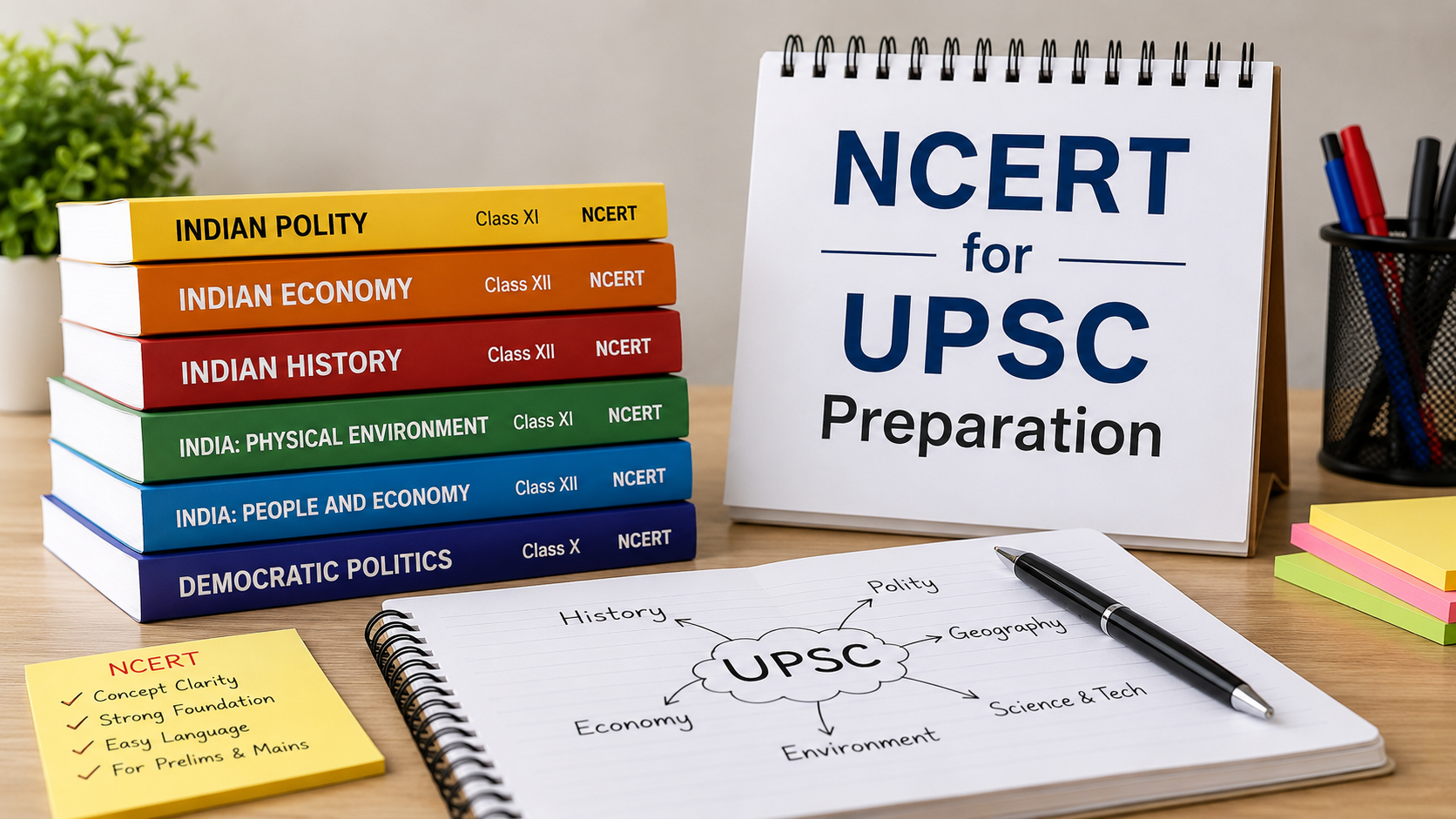
NCERT for UPSC Preparation: Complete Booklist and Smart Study Strategy for Beginners
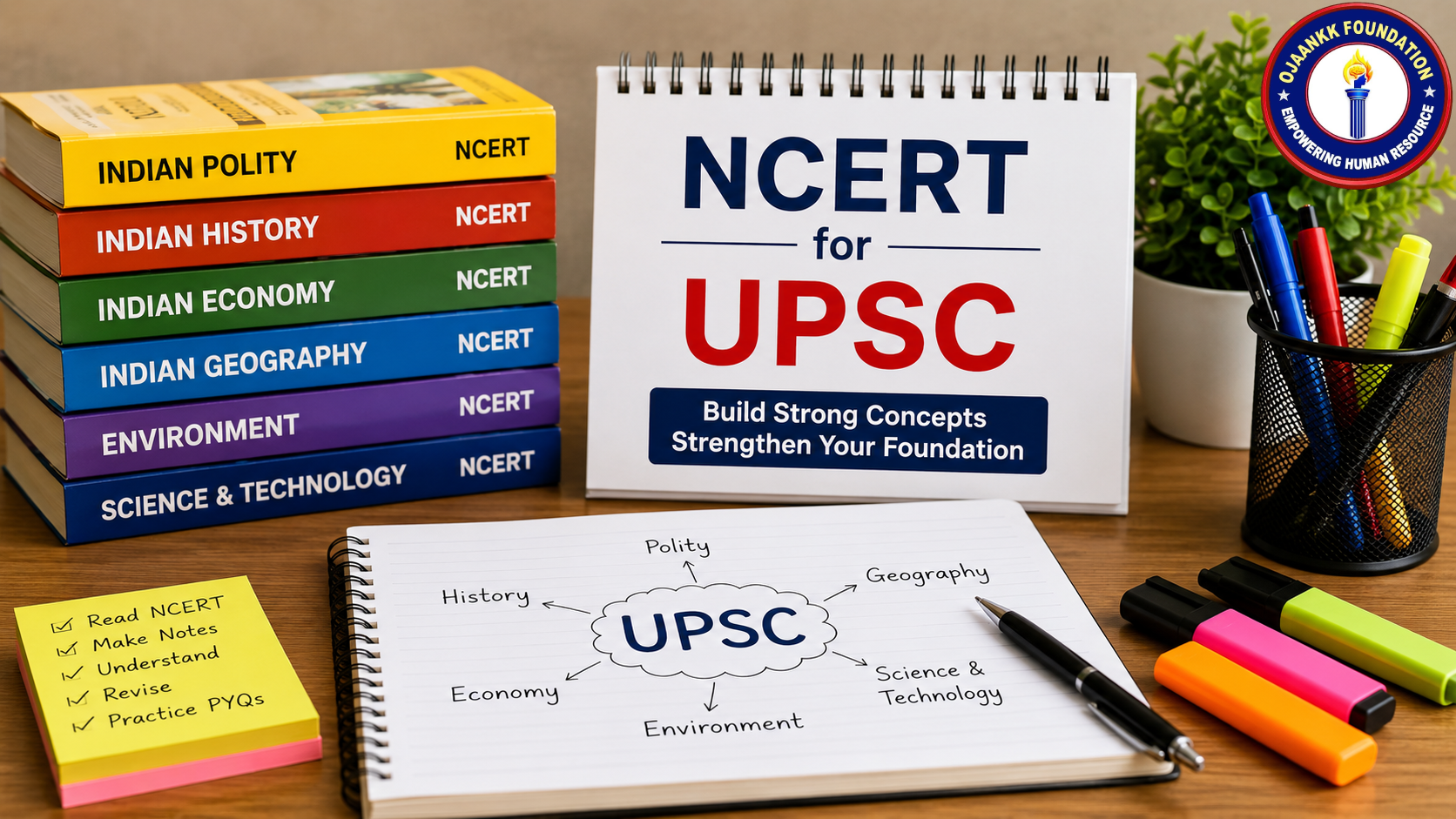
NCERT Books for UPSC Preparation: Complete Strategy, Booklist and Smart Study Plan for Beginners
Introduction
Every UPSC aspirant hears one piece of advice repeatedly—"Start with NCERT books.” But many students still remain confused about the following:
-
Which NCERTs are important?
-
How many NCERT books should be covered?
-
Are old NCERTs better than new ones?
-
How should beginners study NCERTs for UPSC?
NCERT books form the foundation of UPSC Civil Services Examination preparation because they explain concepts in a simple, structured, and authentic manner. Whether it is:
-
History
-
Geography
-
Polity
-
Economy
-
Environment
-
Science
NCERTs help aspirants build conceptual clarity before moving to advanced reference books.
For beginners, NCERTs are not just books—they are the base of UPSC preparation. Even toppers consistently recommend revising NCERTs multiple times.
This blog explains:
-
Best NCERT books for UPSC
-
Subject-wise NCERT strategy
-
How to read NCERT effectively
-
Common mistakes students make
-
Smart preparation strategy for Prelims and Mains
Why are NCERT Books Important for the UPSC?
NCERT books are considered essential because they:
-
Build strong fundamentals
-
Explain concepts in simple language
-
Help beginners understand basic concepts
-
Improve analytical understanding
-
Provide authentic information
-
Help in answer writing
UPSC frequently asks conceptual and factual questions directly or indirectly based on NCERT content.
Especially for:
-
History
-
Geography
-
Environment
-
Science
-
Society
NCERTs are extremely important.
Best NCERT Books for UPSC Preparation
1. History NCERTs
Ancient History
-
Class 6 — Our Past I
-
Class 11 — Ancient India
Medieval History
-
Class 7 — Our Past II
-
Class 11 — Medieval India
Modern History
-
Class 8 — Our Past III
-
Class 12 — Modern Indian History
Art & Culture
-
Class 11 — Introduction to Indian Art
History NCERTs help in:
-
Understanding chronology
-
Building historical perspective
-
Preparing for culture questions
2. Geography NCERTs
Important Geography Books
-
Class 6 to 10 Geography
-
Class 11 — Physical Geography
-
Class 12 — Human Geography
-
Class 12 — India: People and Economy
Geography NCERTs are highly important for the following:
-
Maps
-
Physical geography
-
Indian geography
-
Climate
-
Agriculture
-
Disaster management
3. Polity NCERTs
Important Books
-
Class 9 — Democratic Politics
-
Class 10 — Democratic Politics II
-
Class 11 — Indian Constitution at Work
These books help beginners understand:
-
Constitution
-
Democracy
-
Rights
-
Parliament
-
Judiciary
-
Federalism
4. Economy NCERTs
Important Books
-
Class 9 Economics
-
Class 10 Economics
-
Class 11 Indian Economic Development
-
Class 12 Macroeconomics
Economy NCERTs simplify:
-
GDP
-
Inflation
-
Banking
-
Economic growth
-
Government schemes
5. Environment & Ecology
Important Sources
-
Class 12 Biology Chapters
-
Geography NCERTs
-
Science NCERTs
Environment has become increasingly important in UPSC Prelims.
Topics include:
-
Ecosystems
-
Biodiversity
-
Climate change
-
Conservation
6. Science NCERTs
Important Books
-
Class 6 to 10 Science
-
Selective reading of Class 11 & 12 Biology
Science NCERTs are useful for:
-
Basic science concepts
-
Biotechnology
-
Health
-
Space
-
Technology
Old NCERT vs New NCERT: Which is Better?
Many aspirants remain confused between old and new NCERTs.
Old NCERTs
Useful for:
-
Ancient History
-
Medieval History
-
Geography
New NCERTs
Useful for:
-
Simpler language
-
Updated content
-
Better presentation
Most toppers recommend combining both wherever necessary.
How to Read NCERT for the UPSC?
1. Read Slowly for Understanding
Do not rush.
Focus on:
-
Concept clarity
-
Understanding themes
-
Interlinking topics
2. Make Short Notes
Prepare concise notes for:
-
Revision
-
Prelims facts
-
Mains answer writing
3. Revise Multiple Times
Revision is more important than reading many books.
Most toppers revise NCERTs.
-
3–5 times
4. Solve PYQs
Previous Year Questions help identify the following:
-
Important themes
-
UPSC trends
-
Repeated concepts
5. Link Current Affairs with NCERTs
Try connecting:
-
Climate news with Geography
-
Parliamentary news with Polity
-
Economic issues with Economy NCERTs
This improves analytical understanding.
Common Mistakes Students Make
1. Ignoring NCERTs
Many students directly jump to advanced books.
This creates weak fundamentals.
2. Reading Without Notes
Without revision notes, retention becomes difficult.
3. Too Many Sources
Students often collect excessive material instead of revising basics.
4. Not Revising
Reading once is never enough for UPSC.
Ideal NCERT Strategy for Beginners
Phase 1: Foundation Building
Start with:
-
Class 6–10 NCERTs
Phase 2: Advanced Understanding
Move to:
-
Class 11–12 NCERTs
Phase 3: Standard Books
After NCERTs:
-
Laxmikanth
-
Spectrum
-
GC Leong
-
Economy books
become easier to understand.
How NCERT Helps in UPSC Prelims
NCERTs are important for:
-
Static GK
-
Conceptual MCQs
-
Environment questions
-
Geography mapping
-
Science & Tech basics
Many UPSC Prelims questions are directly inspired from NCERT concepts.
How NCERT Helps in UPSC Mains
NCERTs improve:
-
Conceptual clarity
-
Analytical thinking
-
Structured answer writing
-
Interdisciplinary understanding
They also help in:
-
Essay
-
Ethics
-
Society
-
Governance
topics.
Are NCERTs Enough for UPSC?
NCERTs alone are NOT enough to clear UPSC.
But they are:
-
The starting point
-
The foundation
-
The most important beginner resource
After completing NCERTs, aspirants must move to:
-
Standard reference books
-
Current affairs
-
Answer writing practice
-
Mock tests
Conclusion
NCERT books are the backbone of UPSC preparation. They help aspirants build conceptual clarity, strengthen fundamentals, and prepare a solid base for advanced study.
Whether you are a beginner or an experienced aspirant, revising NCERTs regularly can significantly improve both Prelims and Mains preparation.
In UPSC preparation, success does not come from reading too many books — it comes from:
-
Strong basics
-
Smart revision
-
Consistency
-
Conceptual understanding
And NCERTs remain the best starting point for achieving all of these.
FAQs
1. Which NCERT books are most important for UPSC?
History, Geography, Polity, Economy, Environment, and Science NCERTs from Classes 6–12 are highly important.
2. Are NCERT books enough for UPSC preparation?
No, but they provide the foundation for advanced preparation.
3. Should I read old NCERTs or new NCERTs?
Both are useful. Old NCERTs are especially important for History and Geography.
4. How many times should NCERTs be revised?
Most toppers recommend revising NCERTs at least 3–5 times.
5. Can beginners start UPSC preparation with NCERTs?
Yes, NCERTs are considered the best starting point for beginners because they explain concepts in simple language.