Old NCERT vs New NCERT for UPSC | Which is Better for UPSC Preparation?
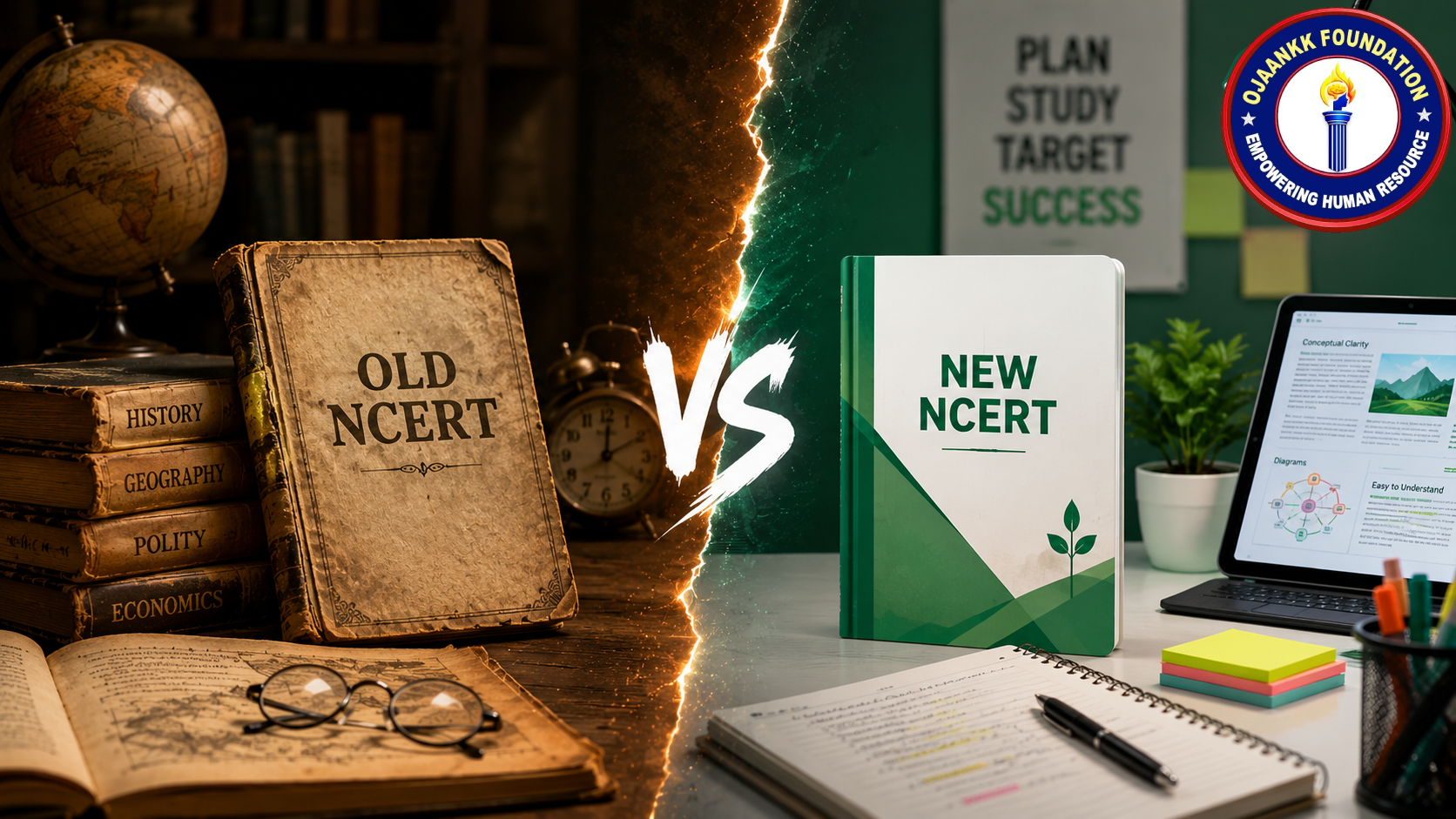
Old NCERT vs New NCERT for UPSC: Which One is Better for UPSC Preparation?
NCERT books are considered the foundation of UPSC Civil Services Examination preparation. Every UPSC topper recommends reading NCERTs because they help aspirants build conceptual clarity and strengthen their basics.
However, one of the most common questions among beginners is:
“Should I read Old NCERT or New NCERT for UPSC?”
This confusion is common because both Old and New NCERTs have their own importance in UPSC preparation. In this detailed blog, we will compare Old NCERT vs New NCERT, discuss their advantages and disadvantages, and explain which books are more useful for different UPSC subjects.
Why are NCERT Books Important for the UPSC?
NCERT books are important because they:
- Build strong fundamentals
- Explain concepts in simple language
- Help in both Prelims and Mains
- Improve analytical understanding
- Cover static portions of the syllabus
- Help in answer-writing preparation
UPSC frequently asks conceptual and factual questions directly or indirectly from NCERTs.
What are Old NCERTs?
Old NCERTs are textbooks published before the curriculum revision by NCERT.
These books are especially famous for subjects like:
- Ancient History
- Medieval History
- Geography
- Sociology
- Economics
Old NCERTs are known for their detailed explanations and factual depth.
What are New NCERTs?
New NCERTs are revised editions introduced after curriculum changes.
These books are:
- More student-friendly
- Simpler in language
- More conceptual
- Updated according to modern educational needs
New NCERTs are widely recommended for beginners starting UPSC preparation.
Old NCERT vs New NCERT: Major Differences
| Basis | Old NCERT | New NCERT |
|---|---|---|
| Language | Detailed & traditional | Simple & modern |
| Content | More factual | More conceptual |
| Depth | Higher depth in some subjects | Balanced explanation |
| Readability | Slightly difficult | Easy to understand |
| UPSC Relevance | Excellent for History & Geography | Good for basics |
| Examples | Traditional examples | Contemporary examples |
| Best For | Advanced preparation | Beginners |
Which is Better for UPSC Preparation?
The answer depends on the subject and preparation level.
For most aspirants, a combination of both Old and New NCERTs works best.
Subject-Wise Strategy: Old NCERT vs New NCERT
1. History
Old NCERT – Highly Recommended
Old NCERTs are extremely useful for:
- Ancient History
- Medieval History
- Art & Culture
Recommended Old NCERT History Books
- Ancient India – R.S. Sharma
- Medieval India – Satish Chandra
- Modern India – Bipan Chandra
These books provide detailed historical understanding and factual clarity.
2. Geography
Both Old and New NCERTs are Important
Old NCERT Advantages
- Better conceptual explanation
- Strong physical geography coverage
New NCERT Advantages
- Easier language
- Better diagrams and presentation
Recommended Geography NCERTs
- Class 6–12 Geography NCERTs
- Old NCERT by G.C. Leong (additional reference)
3. Polity
New NCERTs are Sufficient
For polity basics, New NCERTs are enough.
Focus more on:
- Class 9–12 Political Science NCERTs
- M. Laxmikanth after NCERTs
4. Economics
New NCERTs are Better for Beginners
Economics concepts become easier through New NCERTs because they explain:
- Inflation
- GDP
- Banking
- Fiscal policy
- Economic development
in a simpler manner.
5. Sociology
Old NCERTs are Very Useful
Old Sociology NCERTs help in:
- Society-related topics
- Essay writing
- Ethics paper
- GS Paper I
They provide excellent conceptual understanding.
Advantages of Old NCERTs for UPSC
1. Detailed Explanation
Old NCERTs provide in-depth coverage of topics.
2. Better Historical Content
Ancient and Medieval History are explained exceptionally well.
3. Useful for Mains
They help in analytical understanding and answer writing.
4. Strong Conceptual Clarity
Concepts are discussed with greater depth.
Advantages of New NCERTs for UPSC
1. Easy Language
Simple language makes learning easier for beginners.
2. Updated Content
New editions include updated concepts and examples.
3. Faster Completion
Less bulky compared to old books.
4. Better Presentation
Diagrams, flowcharts, and illustrations improve understanding.
Should Beginners Read Old NCERTs?
Beginners should first complete New NCERTs because
- They are easier to understand
- They help build a basic foundation
- They simplify complex topics
After building basics, aspirants can selectively read Old NCERTs for important subjects like History and Geography.
Ideal NCERT Strategy for UPSC Aspirants
Step 1
Read New NCERTs from Class 6 to 12.
Step 2
Make short notes while reading.
Step 3
Solve UPSC Previous Year Questions.
Step 4
Refer to Old NCERTs for:
- Ancient History
- Medieval History
- Geography
- Sociology
Step 5
Revise multiple times.
Common Mistakes While Reading NCERTs
1. Reading Too Many Books Together
Avoid reading both old and new books simultaneously in the beginning.
2. Ignoring Revision
Revision is more important than collecting books.
3. Not Making Notes
Short notes help in faster revision.
4. Skipping PYQs
Always connect NCERT learning with UPSC PYQs.
Final Recommendation: Old NCERT or New NCERT?
Best Approach for UPSC Preparation
| Subject | Recommended Source |
|---|---|
| History | Old NCERT |
| Geography | Both |
| Polity | New NCERT |
| Economics | New NCERT |
| Sociology | Old NCERT |
| Science | New NCERT |
For most beginners, New NCERTs should be the starting point. After completing basics, aspirants can selectively use Old NCERTs for deeper understanding.
Conclusion
Both Old NCERTs and New NCERTs are valuable for UPSC preparation. The key is not to read every book blindly but to follow a smart and selective approach according to the UPSC syllabus.
New NCERTs help build foundational understanding, while Old NCERTs strengthen depth and analytical clarity in selected subjects.
The best strategy is to combine conceptual clarity with smart revision and regular PYQ practice.