Super El Niño 2026: How It Could Affect India’s Weather, Economy and Monsoon
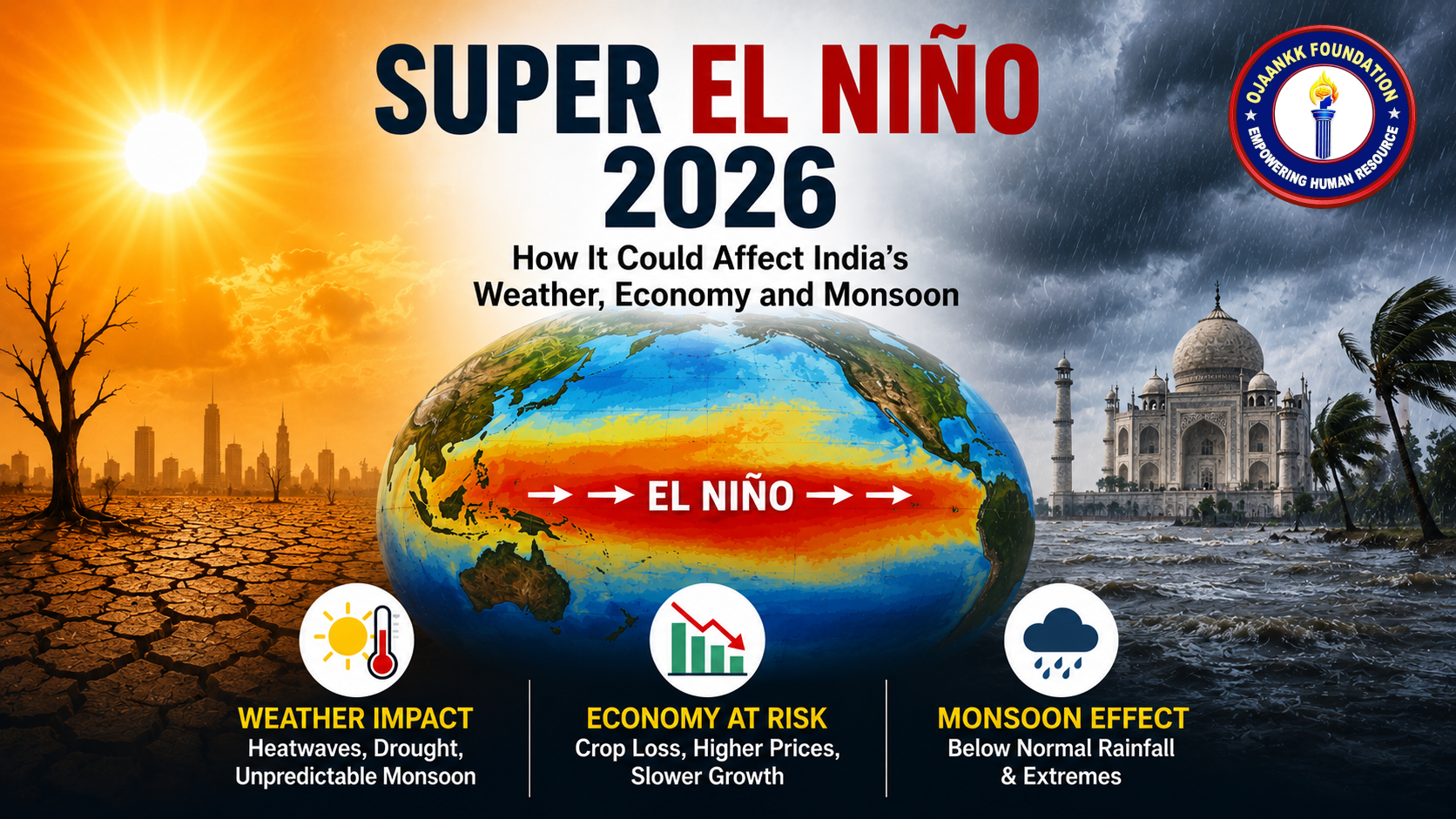
El Niño Forecast 2026: Will India Face Weak Monsoon, Heatwaves and Climate Crisis?
Introduction
The possibility of a strong El Niño event in 2026 is becoming one of the biggest climate concerns for India and the world. Scientists and weather agencies are closely monitoring rapidly rising Pacific Ocean temperatures, with several forecasts warning that El Niño conditions may develop earlier and stronger than expected.
For India, El Niño is especially important because it directly affects:
-
Southwest monsoon rainfall
-
Agriculture production
-
Water availability
-
Food inflation
-
Heatwaves
-
Power demand
As global temperatures continue rising due to climate change, experts fear that a potential “Super El Niño” could trigger severe weather disruptions, including droughts, crop damage, and extreme heat events across multiple regions.
What is El Niño?
El Niño is a climate phenomenon caused by abnormal warming of sea surface temperatures in the central and eastern Pacific Ocean. It is part of the broader ENSO (El Niño Southern Oscillation) climate cycle.
Normally:
-
Trade winds push warm water toward the western Pacific
-
Cooler water rises near South America
During El Niño:
-
Trade winds weaken
-
Warm water shifts eastward
-
Global weather patterns get disrupted
This affects rainfall, temperature, storms, droughts, and agricultural conditions across many parts of the world.
Why is El Niño Important for India?
India’s economy and agriculture remain heavily dependent on the southwest monsoon.
Historically, strong El Niño events are associated with:
-
Weak monsoon rainfall
-
Drought-like conditions
-
Lower agricultural output
-
Rising food prices
-
Water shortages
-
Extreme heatwaves
According to recent forecasts, India may face below-normal rainfall if El Niño strengthens during the second half of the monsoon season.
Why is El Niño 2026 Getting Global Attention?
Rapid Pacific Ocean Warming
Scientists have observed unusually fast warming in Pacific Ocean temperatures. Some meteorologists believe this warming could evolve into a strong or even “Super El Niño.”
Risk of Extreme Weather
A strong El Niño can increase:
-
Heatwaves
-
Droughts
-
Wildfires
-
Crop failures
-
Water stress
Globally, scientists are already linking rising fire outbreaks and extreme heat patterns to the strengthening El Niño threat.
Early Arrival Concerns
International forecasts indicate El Niño conditions may emerge earlier than previously expected and could persist through much of the monsoon period.
Possible Impact of El Niño on India
1. Weak Monsoon
El Niño often weakens monsoon winds and reduces rainfall across India.
Possible consequences:
-
Rainfall deficit
-
Delayed monsoon
-
Uneven rainfall distribution
-
Drought-like conditions
2. Agriculture Crisis
Lower rainfall can affect:
-
Rice production
-
Pulses
-
Sugarcane
-
Oilseeds
This may reduce farm income and increase rural distress.
3. Food Inflation
Poor agricultural output can lead to:
-
Higher food prices
-
Inflationary pressure
-
Supply shortages
Food inflation becomes a major economic concern during weak monsoon years.
4. Water Scarcity
Reduced rainfall may lower:
-
Reservoir levels
-
Groundwater recharge
-
River water availability
Urban and rural water stress could intensify.
5. Heatwaves and Power Demand
El Niño years are often associated with:
-
Extreme temperatures
-
Longer summers
-
Higher electricity demand
This can put pressure on India’s power infrastructure.
Can India Still Receive Good Rainfall During El Niño?
Yes. El Niño does not always guarantee drought.
Several other climate factors influence India’s monsoon, including:
-
Indian Ocean Dipole (IOD)
-
Arabian Sea conditions
-
Regional ocean temperatures
Experts are monitoring whether a positive Indian Ocean Dipole could partly offset El Niño’s negative effects on India’s rainfall.
What is a Super El Niño?
A Super El Niño is an extremely intense El Niño event where Pacific Ocean temperatures rise significantly above normal levels.
Past major Super El Niño events:
-
1982–83
-
1997–98
-
2015–16
These events caused:
-
Global droughts
-
Floods
-
Agricultural losses
-
Massive economic disruptions
Scientists warn that the current warming trend could potentially evolve into one of the strongest El Niño events ever recorded.
Climate Change and El Niño
Climate change may intensify El Niño impacts by:
-
Increasing ocean temperatures
-
Amplifying heatwaves
-
Raising extreme weather frequency
This combination creates “compound climate risks” where:
-
Heatwaves
-
Water scarcity
-
Food inflation
-
Energy demand
occur simultaneously.
How is India Preparing?
Indian agencies such as the India Meteorological Department are closely monitoring ENSO conditions and monsoon trends.
Key preparedness measures include:
-
Improved weather forecasting
-
Water management planning
-
Crop advisories for farmers
-
Heatwave preparedness
-
Renewable energy expansion
India is also investing in:
-
Solar energy
-
Smart irrigation
-
Climate-resilient agriculture
-
Disaster management systems
to reduce long-term climate vulnerability.
Conclusion
The growing possibility of a strong El Niño event in 2026 has increased concerns over India’s monsoon, food security, water availability, and economic stability. While forecasts are still evolving, rising Pacific Ocean temperatures and global climate patterns indicate that India could face significant weather disruptions in the coming months.
As climate change intensifies global warming and extreme weather events, El Niño is no longer just a seasonal weather phenomenon — it has become a major economic, environmental, and policy challenge for countries like India.
The coming monsoon season will therefore be closely watched not only by meteorologists, but also by farmers, policymakers, businesses, and millions of citizens whose lives depend on stable climate conditions.
FAQs
1. What is El Niño?
El Niño is a climate phenomenon caused by warming of sea surface temperatures in the Pacific Ocean, which disrupts global weather patterns.
2. How does El Niño affect India?
El Niño often weakens India’s monsoon rainfall and increases the risk of droughts, heatwaves, and food inflation.
3. What is a Super El Niño?
A Super El Niño is an extremely strong El Niño event with unusually high Pacific Ocean warming and severe global climate impacts.
4. Will El Niño definitely cause drought in India?
Not necessarily. Other climate systems such as the Indian Ocean Dipole can influence India’s rainfall and may partly offset El Niño effects.
5. Why is El Niño important for the Indian economy?
India’s agriculture, food prices, water supply, and power demand are highly dependent on monsoon rainfall, making El Niño economically significant.
Click here for more blogs