UNESCO World Heritage List 2026: Complete New Additions, India's Sarnath & UPSC Notes
UNESCO World Heritage List 2026: Complete New Additions, India's Sarnath & UPSC Notes

Introduction
The 48th Session of the UNESCO World Heritage Committee, held in Busan, Republic of Korea (19–29 July 2026), approved several new inscriptions to the UNESCO World Heritage List. The additions recognize sites of Outstanding Universal Value (OUV) and strengthen global efforts to preserve humanity's shared cultural and natural heritage.
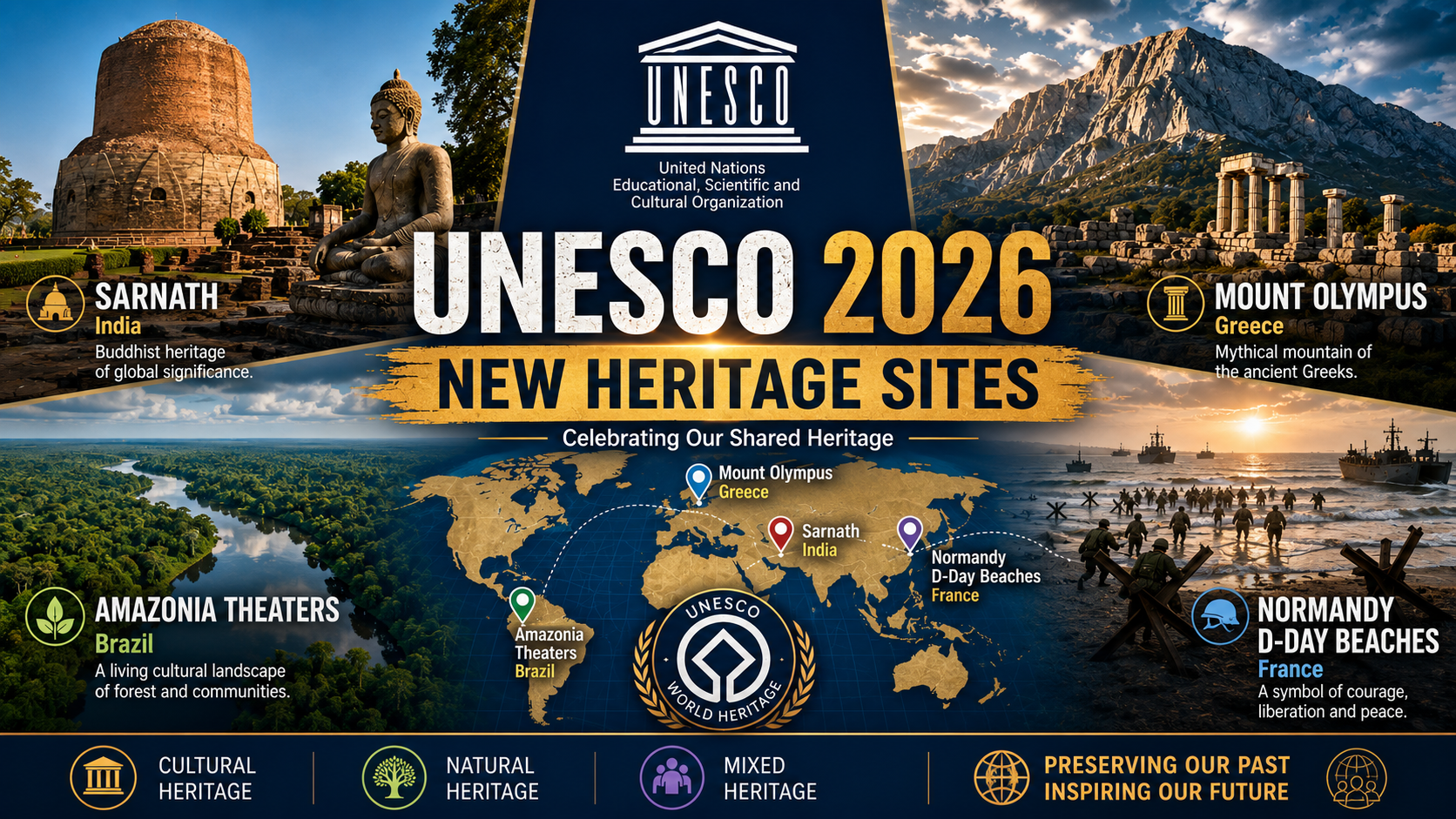
One of the biggest highlights for India was the inscription of the Ancient Buddhist Site of Sarnath, which became India's 45th UNESCO World Heritage Site. The 2026 inscriptions also included important cultural, natural, and mixed heritage properties from multiple countries.
Why This Matters Now
- UNESCO recognition strengthens conservation, tourism, and international cultural cooperation.
- India's inscription of Sarnath marks a major milestone for Buddhist heritage preservation.
- The topic is highly relevant for UPSC Prelims, GS Paper I, GS Paper II, Culture, and International Organizations.
Background
The UNESCO World Heritage Convention (1972) established a global framework for identifying and protecting sites with Outstanding Universal Value. Today, the World Heritage List contains 1,248 properties across 170 countries, including 972 cultural, 235 natural, and 41 mixed heritage sites.
Each year, the World Heritage Committee, comprising representatives from 21 States Parties, evaluates nominations submitted by member countries based on strict cultural and natural criteria.
Main Analysis
India's Historic Achievement: Sarnath
The Ancient Buddhist Site of Sarnath (Uttar Pradesh) was inscribed on the World Heritage List during the 48th session. Sarnath is revered as the place where Gautama Buddha delivered his first sermon, making it one of Buddhism's holiest pilgrimage destinations. The inscription recognizes its exceptional archaeological, historical, and spiritual significance.
Major New Additions in 2026
Among the notable inscriptions announced during the 48th session were:
- Sarnath – India
- Amazonia Theaters – Brazil
- Mount Olympus – Greece (Mixed Heritage)
- Normandy D-Day Landing Beaches – France
- Gdynia Modernist City Centre – Poland
Several additional cultural and natural sites were also approved during the Busan session.
Why UNESCO Status Matters
World Heritage inscription provides international recognition and encourages stronger conservation measures. It often boosts tourism, attracts funding for preservation, and increases global awareness of a site's cultural or ecological importance.
However, inscription also brings responsibilities, requiring governments to ensure long-term protection and sustainable management of these heritage properties.
The Selection Process
Sites are nominated by national governments and evaluated by expert advisory bodies before consideration by the World Heritage Committee.
The Committee assesses whether a site demonstrates Outstanding Universal Value, integrity, authenticity (where applicable), and effective management before granting World Heritage status.
Challenges in Heritage Conservation
Many heritage sites face threats from:
- Climate change
- Armed conflict
- Urbanization
- Tourism pressure
- Natural disasters
- Illegal encroachments
UNESCO also maintains the List of World Heritage in Danger for sites facing serious conservation challenges. During the 2026 session, additional endangered sites were recognized where urgent protection was required.
What This Means for India
India's successful inscription of Sarnath reinforces its position as one of the world's richest repositories of cultural heritage. The recognition supports Buddhist tourism, strengthens India's cultural diplomacy, and contributes to heritage-led economic development.
The inscription also aligns with India's efforts to preserve archaeological monuments while promoting sustainable tourism and international cultural cooperation.
What Happens Next
Best Case
Newly inscribed sites receive sustained conservation funding, improved management, and responsible tourism development.
Most Likely Case
Countries continue implementing UNESCO conservation guidelines while leveraging World Heritage status to promote cultural tourism and local development.
Worst Case
Poor management, climate change, armed conflict, or uncontrolled tourism threaten the Outstanding Universal Value of newly recognized sites, requiring emergency conservation measures.
Conclusion
The UNESCO World Heritage List 2026 reflects the global commitment to preserving places of exceptional cultural and natural value. India's inclusion of Sarnath is a landmark achievement that strengthens both heritage conservation and cultural diplomacy. For UPSC aspirants, the 2026 inscriptions are important not only from the perspective of art and culture but also international cooperation, sustainable development, and heritage governance.
UPSC Prelims Facts
- UNESCO World Heritage Convention: 1972
- World Heritage Committee: 21 elected member states.
- 48th Session: Busan, Republic of Korea (19–29 July 2026).
- India's newest World Heritage Site (2026): Sarnath.
- Current World Heritage List: 1,248 properties (972 Cultural, 235 Natural, 41 Mixed).
Mains Value Addition
GS Paper I: Indian Heritage and Culture
GS Paper II: UNESCO and International Organizations
GS Paper III: Sustainable Tourism and Conservation
Essay Themes:
- Cultural Heritage and National Identity
- Heritage Conservation in the Age of Climate Change
- India's Soft Power Through Buddhist Diplomacy
FAQs
1. What is a UNESCO World Heritage Site?
A site recognized by UNESCO for its Outstanding Universal Value and protected under the World Heritage Convention.
2. Which Indian site was added in 2026?
The Ancient Buddhist Site of Sarnath in Uttar Pradesh.
3. Where was the 48th UNESCO World Heritage Committee held?
In Busan, Republic of Korea, from 19–29 July 2026.
4. Why is UNESCO recognition important?
It promotes international recognition, conservation, sustainable tourism, and protection of globally significant heritage.
5. Why is this topic important for UPSC?
It is relevant to Art & Culture, International Relations, UNESCO, Buddhism, Sustainable Development, and Current Affairs.