Why Are Crude Oil Prices Rising Again? West Asia Tensions Explained
Why Are Crude Oil Prices Rising Again? West Asia Tensions Explained

Introduction
Global crude oil prices have started rising again as renewed geopolitical tensions in West Asia raise concerns over disruptions to energy supplies. Escalating military activity, attacks on shipping routes, and fears surrounding strategic maritime chokepoints have made energy markets increasingly volatile.
Oil markets react not only to actual supply disruptions but also to the possibility of future shortages. As uncertainty grows, traders factor geopolitical risks into prices, pushing benchmark crude higher even before supplies are significantly affected.
Why This Matters Now
- Renewed conflict in West Asia has increased fears of disruptions to global oil supplies.
- Strategic shipping routes like the Strait of Hormuz and Bab el-Mandeb remain under heightened security concerns.
- Rising crude prices could increase fuel costs, inflation, and import bills for major energy-importing countries like India.
Background
West Asia accounts for a significant share of global crude oil production and exports. Most Gulf oil reaches international markets through narrow maritime passages, especially the Strait of Hormuz, while shipments using the Red Sea route depend on safe navigation through Bab el-Mandeb.
Whenever conflict threatens these routes, energy markets immediately respond because even temporary disruptions can affect millions of barrels of daily oil trade.
Main Analysis
Escalating Geopolitical Tensions
Recent military strikes and continued instability across parts of West Asia have increased concerns about the security of oil production facilities and shipping lanes. Although physical supplies may not always be disrupted immediately, uncertainty alone often drives prices higher.
Threats to Strategic Maritime Chokepoints
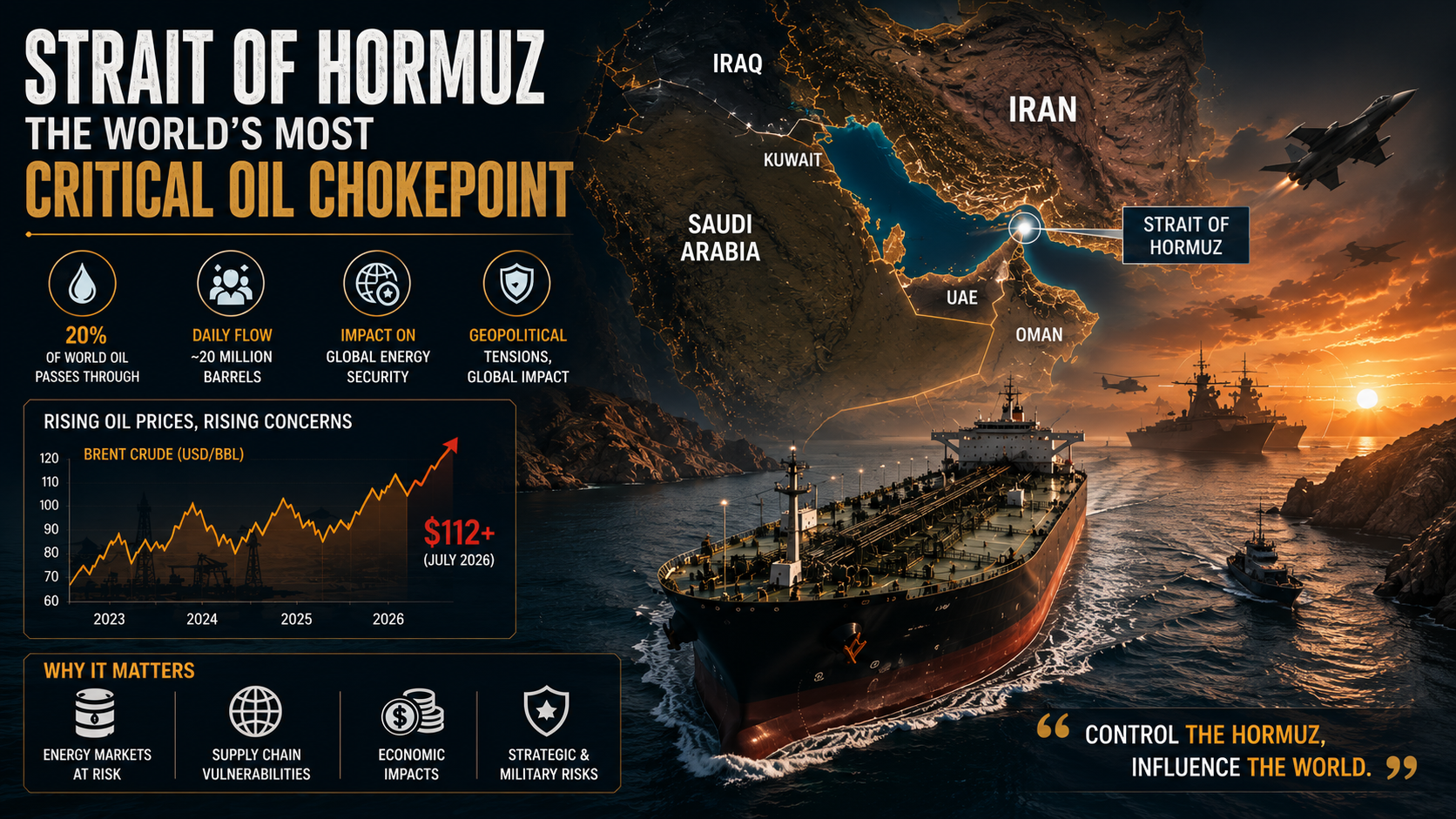
The Strait of Hormuz handles roughly one-fifth of global oil and gas flows, while Bab el-Mandeb connects the Red Sea with the Gulf of Aden and is vital for Europe–Asia shipping. Any threat to these passages increases freight costs, insurance premiums, and supply risks.
Supply Concerns Beyond Geopolitics
Oil prices are also influenced by commercial factors such as declining inventories, production decisions by oil-producing countries, and expectations regarding future demand. Recent reports of tightening inventories have reinforced upward pressure on prices alongside geopolitical risks.
Financial Markets React Quickly
Commodity traders continuously reassess geopolitical developments. Even rumors of potential disruptions can trigger sharp movements in futures markets, making oil prices highly volatile during periods of conflict.
Global Economic Implications
Higher oil prices increase transportation and manufacturing costs worldwide. They can contribute to inflation, affect monetary policy decisions, and slow economic growth, particularly in oil-importing economies.
What This Means for India
India imports more than 80% of its crude oil requirements, making it highly sensitive to fluctuations in international oil prices. Rising crude prices can widen the current account deficit, increase the import bill, put pressure on the rupee, and contribute to higher fuel and logistics costs across the economy.
At the same time, India continues to diversify energy sources, expand strategic petroleum reserves, and strengthen energy partnerships to reduce vulnerability to external shocks.
What Happens Next
Best Case
Diplomatic efforts reduce tensions, shipping routes remain secure, and crude prices gradually stabilize.
Most Likely Case
Geopolitical uncertainty persists, keeping oil prices volatile with periodic spikes depending on developments in West Asia.
Worst Case
A major disruption to oil exports or prolonged restrictions through key maritime chokepoints significantly reduces global supply, leading to another sharp increase in crude prices.
Conclusion
The latest rise in crude oil prices is primarily driven by heightened geopolitical risks rather than a sudden collapse in global supply. West Asia remains the world's most strategically important energy-producing region, and tensions affecting the Strait of Hormuz and Bab el-Mandeb continue to influence global markets. For India, managing energy security through diversified imports, strategic reserves, and stable diplomatic engagement remains critical in an increasingly uncertain global environment.
UPSC Prelims Facts
- Brent Crude is the major international benchmark for crude oil pricing.
- The Strait of Hormuz is one of the world's most important oil transit routes.
- Bab el-Mandeb connects the Red Sea with the Gulf of Aden.
- India imports over 80% of its crude oil requirements.
- Higher crude oil prices generally contribute to inflation and increase the import bill.
Mains Value Addition
GS Paper II: India and West Asia, Energy Diplomacy
GS Paper III: Energy Security, Inflation, Balance of Payments
Essay Themes:
- Energy Security and National Development
- Geopolitics of Oil
- India's Strategic Petroleum Policy
- Maritime Security and Global Trade
FAQs
1. Why are crude oil prices rising again?
The primary reasons are renewed geopolitical tensions in West Asia, risks to key shipping routes, and concerns over global oil supply.
2. Why is the Strait of Hormuz important?
It is one of the world's most critical maritime chokepoints, through which about one-fifth of global oil and gas flows pass.
3. How do higher oil prices affect India?
They can increase the import bill, fuel inflation, transportation costs, and pressure on the current account deficit.
4. What role does Bab el-Mandeb play?
It is a strategic gateway connecting the Red Sea and the Gulf of Aden, making it essential for global shipping and energy trade.
5. Why is this topic important for UPSC?
It links Economy, International Relations, Energy Security, Maritime Geography, and Current Affairs, making it relevant across multiple papers.